
Cold Plunge vs Infrared Sauna: Which Is Better for Recovery?
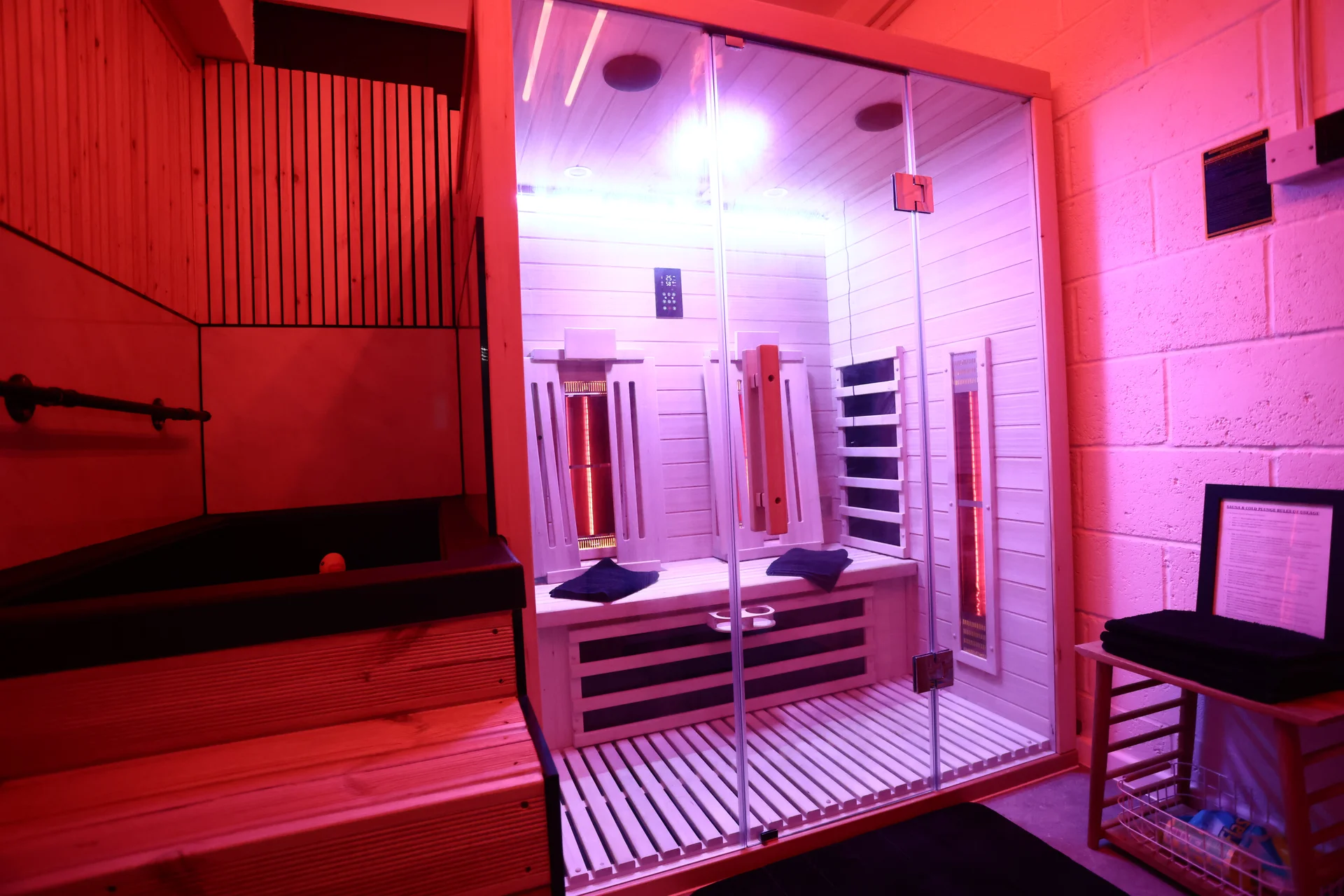
Cold plunge and infrared sauna — you will find both at recovery-focused facilities across East London, including at Labs Fitness in Shoreditch, and they are frequently marketed as alternatives to each other. They are not. They act through entirely different physiological mechanisms, target different aspects of recovery, and deliver the most significant results when used together in a structured protocol. To answer the question of which is better, you first need to understand what each one actually does.
Cold water immersion works primarily through vasoconstriction. When you enter cold water — ideally at 8 to 12 degrees Celsius, the range used in most sports recovery research — peripheral blood vessels constrict sharply, reducing blood flow to the extremities and driving it toward the body's core. This acute inflammatory response reduces the localised swelling and metabolic waste accumulation that follows intense training. When you exit the plunge, rapid vasodilation follows: vessels dilate and a surge of freshly oxygenated blood floods back through the recently exercised tissue.
The neurological effects of cold immersion are equally well documented. Exposure to cold water triggers a significant and sustained elevation in noradrenaline — sometimes as high as 300 percent above baseline — alongside elevated dopamine levels. This combination produces the distinctive post-cold clarity: heightened alertness, improved mood, and reduced perception of effort. For athletes, this has practical value not just for recovery but for the mental sharpness needed in competition or high-intensity training.
Infrared sauna operates through the opposite thermal mechanism. Rather than constricting circulation, heat exposure from infrared panels — which penetrate several centimetres into muscle tissue rather than simply heating the surface — drives vasodilation and raises cardiac output. Blood flow to peripheral tissues increases substantially, accelerating nutrient delivery and the clearance of inflammatory markers. Heat shock proteins, which play a direct role in cellular repair, are released in response to the thermal stress. Muscle tension from training dissipates under sustained heat in a way that cold cannot replicate.
For acute inflammation reduction — the kind that follows a particularly intense session — cold immersion is the faster-acting tool. The vasoconstriction effect reduces swelling and pain signals quickly, which is why ice baths have been used by professional sports teams for decades. For deeper muscle recovery, tension relief, and the longer repair cycle that happens over 24 to 48 hours after training, infrared heat is more effective. The two modalities are not in competition — they address different phases and aspects of the same recovery process.
When used in sequence as contrast therapy, the cumulative effect exceeds either modality alone. The alternating vasoconstriction and vasodilation from moving between sauna and cold plunge creates what is essentially a vascular pump: metabolic waste is flushed out, oxygenated blood rushes in, and the tissue is repeatedly exposed to the signalling cascades triggered by both temperature extremes. Research published in the European Journal of Applied Physiology has documented measurable reductions in DOMS and perceived exertion in athletes who use contrast therapy protocols versus cold-only or heat-only conditions.
The practical protocol for post-training recovery is well established: sauna first, cold plunge second. After training, the infrared sauna begins the repair process by raising circulation and loosening muscle tissue. The cold plunge that follows locks in the benefits by driving down acute inflammation and triggering the vasodilation rebound. The session ends with a net reduction in soreness, a clear neurological uplift, and noticeably compressed recovery time compared to passive rest.
There is one important caveat for strength training athletes specifically. Research has found that cold water immersion applied immediately after a strength session can attenuate hypertrophic signalling — the cellular processes that lead to muscle growth. If maximising muscle mass is your primary goal, using the cold plunge several hours after your strength session, or on rest days, preserves the recovery benefits while minimising the interference with adaptation. For most people — training for general fitness, body composition, or health rather than competitive bodybuilding — this distinction makes little practical difference.
The recovery suite at Labs Fitness on Long Street in Shoreditch, E2, pairs a two-person infrared sauna with a cold plunge maintained at 8 to 12 degrees. The suite is private, self-contained, and available to Peak Plus members as part of their membership. Non-members can book standalone sessions — you do not need a gym membership to use the facility. If you are looking for infrared sauna or cold plunge access in Shoreditch or East London, find out more and book through our recovery page.