
How to Choose a Personal Trainer in London
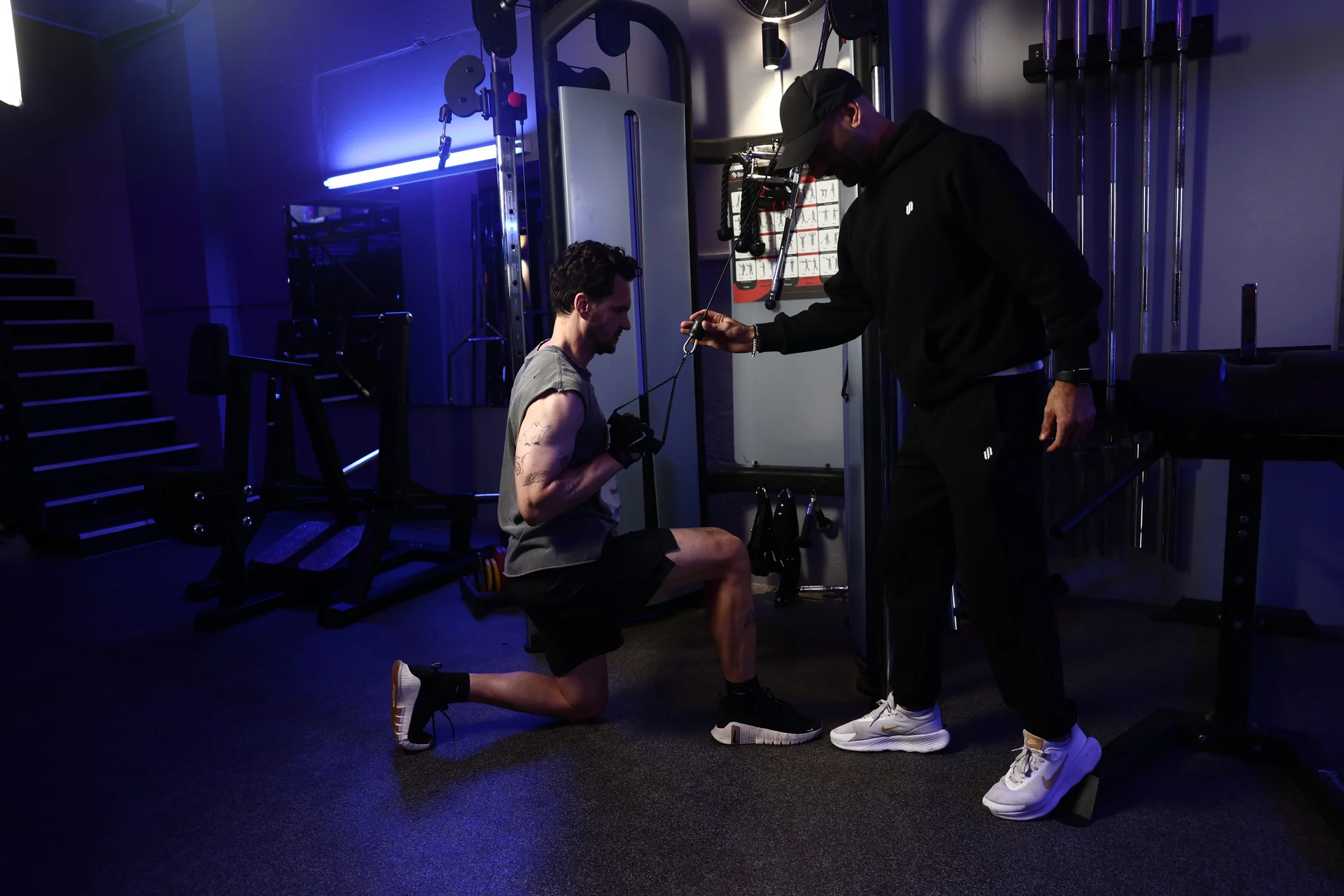
Choosing a personal trainer in London is not straightforward. The city has thousands of PTs, spanning everything from solo freelancers who train clients in parks to coaches at private boutique studios, large commercial gyms, and bespoke specialist facilities. The range in quality, approach, and cost is enormous — and the wrong choice costs you months of progress and a significant amount of money.
The first thing to be clear on is what you actually need. A personal trainer who is excellent at preparing competitive powerlifters may be entirely the wrong choice for someone whose primary goal is sustainable fat loss and improved energy, and vice versa. Before you look at any individual trainer, write down your specific goal, your approximate timeline, and any relevant training history. That clarity will help you identify quickly whether a coach is actually set up to help you.
Qualifications are a baseline, not a differentiator. In the UK, the minimum standard for a personal trainer is a Level 3 PT qualification through a body like CIMSPA or REPs. This tells you a trainer has covered foundational knowledge of anatomy, programming, and exercise technique. It does not tell you whether they are effective with clients, whether their communication style suits you, or whether they have experience with your specific goals. Treat qualifications as a floor, not a selection criterion.
Experience matters more than the certificate on the wall, and the most relevant experience is with people like you. A trainer who has worked extensively with corporate professionals in their 30s and 40s — training around desk jobs and demanding schedules — will typically do a better job for someone in that situation than a trainer who primarily works with competitive athletes, even if the latter has more impressive credentials. Ask specifically: who are most of your current clients, and what are they working toward? If you are focusing your search on East London, what to look for in a personal trainer in Shoreditch applies the same criteria with more local context.
The initial consultation is where you gather the information you need to make a genuine decision. Any reputable personal trainer or studio in London should offer a free initial consultation. This is not a sales meeting — it is a professional assessment opportunity for both parties. A good trainer will ask detailed questions about your health history, your goals, your lifestyle, and what has and has not worked for you previously. If the consultation consists primarily of a sales pitch, treat that as a signal. Once you have found the right fit, how often you should see a personal trainer is the practical question to settle next — frequency has a significant effect on both results and total cost.
Results speak clearly, but be appropriately sceptical of before-and-after photographs. Transformation images are easy to manipulate, highly selective about what they show, and tell you nothing about how sustainable the results were, how typical the experience was, or what the training actually involved. Better evidence includes testimonials that describe the training relationship, the coach's communication style, and the kind of ongoing guidance received — not just the physical outcome.
Logistics matter, and underestimating them leads to dropout. A personal trainer in a studio you can only reach by a 45-minute commute will get cancelled in your busiest weeks — and busy weeks are exactly when you most need consistency. When choosing a PT in London, location relative to your home or workplace is a genuine consideration, not a superficial one. For professionals based in the City or East London, a boutique studio in Shoreditch is often significantly more accessible than a facility in zones 1 or 2 central.
The studio or facility environment affects the quality of your sessions more than most people expect. A crowded gym means your trainer is managing equipment availability as well as managing you. A quiet, well-equipped boutique studio means their attention goes entirely on your training. If you are paying for personal training, the environment in which it takes place directly affects what you receive.
Finally, trust your instinct about the relationship. A trainer's technical knowledge matters, but the quality of the relationship determines whether you will actually use their advice. You need to feel comfortable being honest about your progress, your struggles, and your lifestyle — including the things that do not fit neatly into the programme. The best training relationships are built on candour, and candour requires trust.
At Labs Fitness in Shoreditch, we offer free consultations for anyone considering personal training. Our coaches have a range of specialisms and work with clients at every stage of their training journey, from those picking up a barbell for the first time to athletes with specific performance targets. There is no commitment required to speak with us — contact us through the website and we will arrange a time that works.