
Infrared Sauna Benefits for Athletes and Gym-Goers
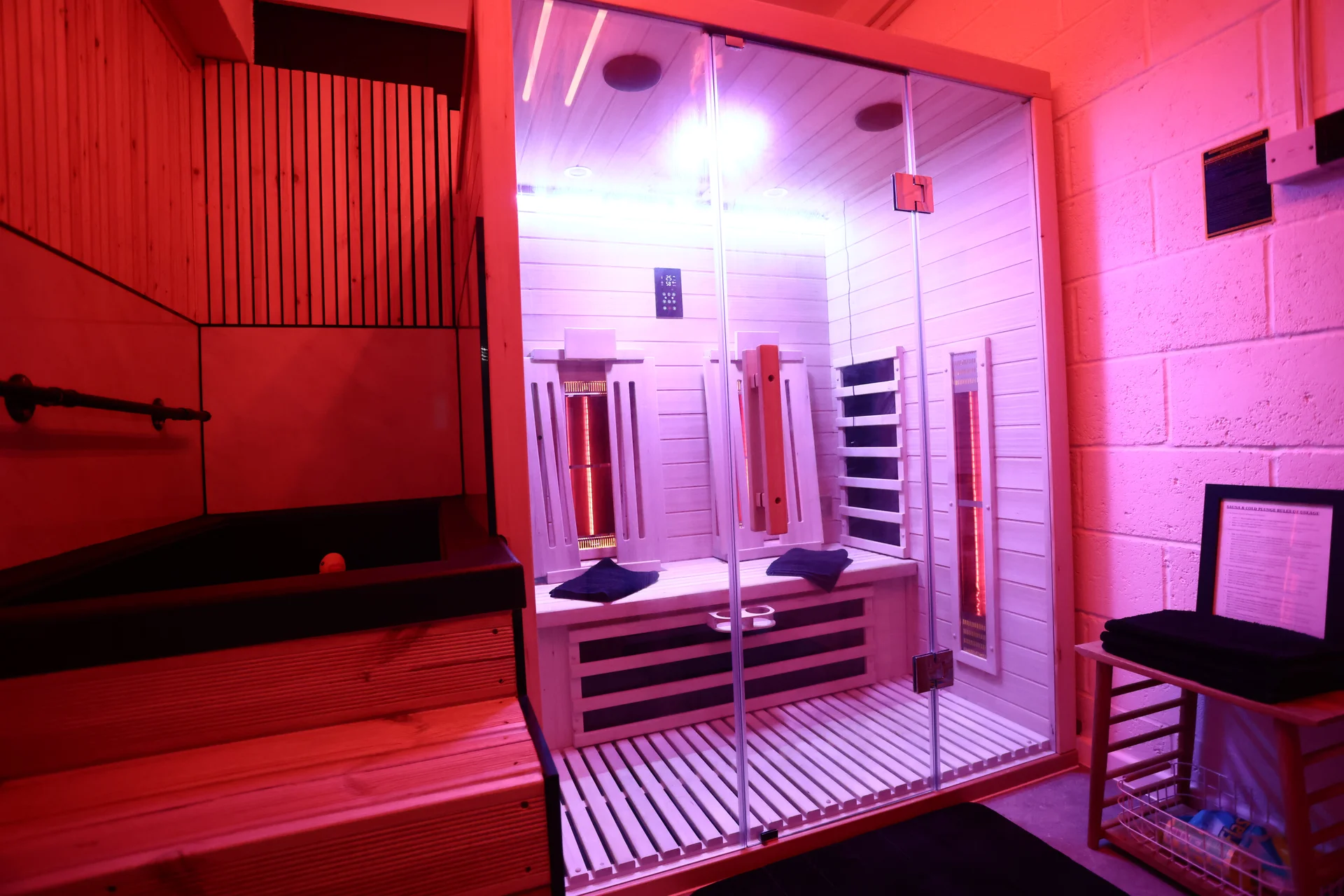
Infrared saunas have moved from luxury wellness accessory to mainstream recovery tool in elite sport over the past decade — and the physiology explains why. Unlike a traditional Finnish sauna, which heats the air around you to very high temperatures, an infrared sauna uses panels that emit radiant wavelengths penetrating several centimetres into muscle and connective tissue, raising core temperature from the inside out. The result is a deeper physiological response at lower ambient temperatures, making sessions more comfortable and easier to sustain consistently.
The primary recovery benefit for anyone training regularly is the effect on circulation and muscle repair. The rise in core temperature triggers a significant increase in blood flow to peripheral tissues, which accelerates the delivery of oxygen and nutrients to muscle fibres damaged during training. At the same time, heat exposure promotes the production of heat shock proteins — molecular chaperones that play a direct role in cellular repair. These proteins help refold damaged proteins within muscle cells, speeding the recovery process that your body undertakes between sessions.
Delayed onset muscle soreness — the stiffness and discomfort that peaks 24 to 48 hours after a demanding workout — is one of the most practical targets for infrared sauna therapy. Research published in the Journal of Clinical Medicine found measurable reductions in DOMS markers in athletes who used infrared heat exposure in the post-exercise window, compared to passive rest. For anyone training three or more times per week, compressing that soreness window means arriving at the next session fresher and able to perform to a higher standard.
Growth hormone secretion is another mechanism worth understanding. Heat stress is a well-documented stimulus for growth hormone release, with studies demonstrating increases of two to five times baseline levels following sauna exposure. Growth hormone plays a central role in muscle tissue repair and fat metabolism — meaning consistent infrared sauna use does not just help you recover from training, it contributes actively to the adaptation process the training was designed to trigger.
The cardiovascular benefits of regular sauna use are substantial and increasingly well-researched. A long-running Finnish cohort study published in JAMA Internal Medicine found that frequent sauna use was associated with a significantly lower risk of cardiovascular events, independent of other lifestyle factors. For gym-goers and athletes, the relevant mechanism is that repeated sauna sessions train vascular responsiveness: the arteries become better at dilating and contracting in response to temperature and exertion, which improves cardiovascular efficiency over time.
Sleep quality is one of the most underappreciated benefits. The temporary elevation in core temperature during a sauna session triggers a compensatory drop in body temperature afterward — and it is this drop that signals the body's readiness for deep sleep. Athletes and active individuals who use infrared sauna sessions in the evening consistently report faster sleep onset and improved sleep depth. Given that sleep is the single most effective recovery tool available, anything that reliably improves it has a compounding effect on training results.
Mental health and cognitive function are also meaningfully affected by regular infrared sauna use. Heat exposure triggers the release of endorphins and brain-derived neurotrophic factor (BDNF), a protein associated with neuroplasticity, mood regulation, and cognitive performance. Many regular users report a clarity and calm following a sauna session that persists for several hours — not merely relaxation, but a measurable improvement in focus and stress resilience.
For athletes with performance goals, the heat acclimatisation effect of infrared sauna use is an additional consideration. Regular heat exposure increases plasma volume, improves thermoregulation, and raises the lactate threshold — adaptations that translate directly to endurance performance. This is why heat training protocols are now used by endurance athletes preparing for competition in warm conditions, and why the infrared sauna is a legitimate training tool rather than simply a recovery aid.
The Labs Fitness recovery suite in Shoreditch is built around a private infrared sauna and cold plunge, available to Peak Plus members and as standalone bookings for non-members. Whether you are recovering between training sessions, looking to improve your sleep, or simply want a private sauna in East London without a spa membership, you can book through our contact page. The suite is self-contained and private — no shared facilities, no waiting.